Late Fees
Add a percentage late fee to invoices that go unpaid past their grace period: where to set it, how it lands on the timeline, one-time charging, tax on top, and how it differs from blocking.
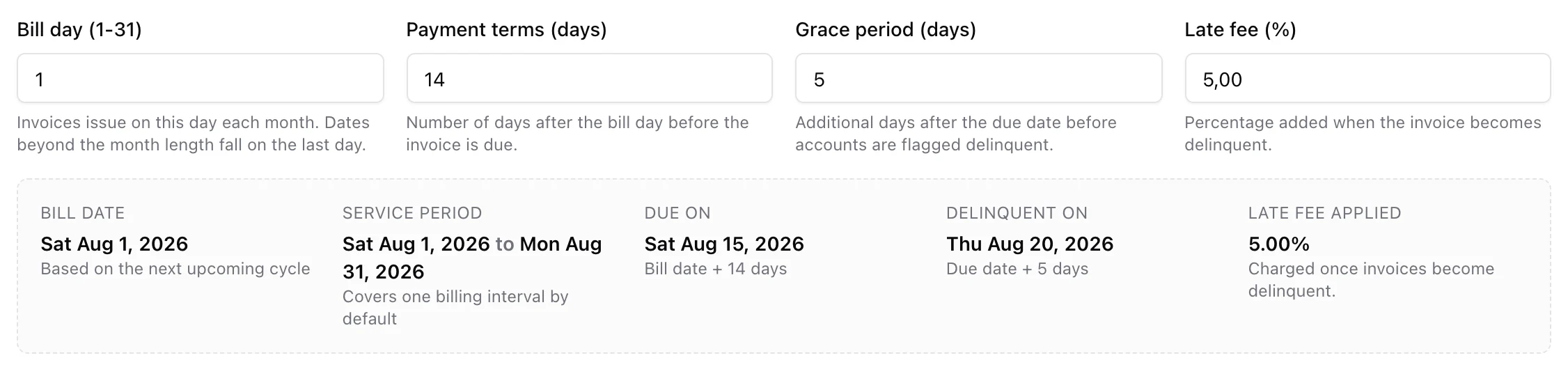
A late fee adds a percentage charge to an invoice once it goes unpaid past its grace period. It is a single setting, it stacks onto the same billing timeline as your due date and dunning, and ISPBox adds it to the invoice for you - once - when the account tips into delinquency.
1. Set the percentage
Open Settings > Invoices > Billing cycle and set Late fee (%). It is a percentage of the overdue balance, added when the invoice becomes delinquent. Set it to 0 to disable late fees entirely.
The same tab shows the whole timeline that governs it, with a live preview:
- Bill day - the invoice's bill date.
- Due on = bill date + Payment terms.
- Delinquent on = due date + Grace period. This is when the late fee is charged.
In the example above - 14-day terms and a 5-day grace - an invoice billed Aug 1 is due Aug 15, turns delinquent Aug 20, and picks up a 5% late fee then.
2. How it is charged
- The fee is the overdue balance times your percentage - so a 5% late fee on a $50 unpaid invoice adds $2.50.
- It appears as its own invoice line: "Late fee for Invoice [number]" with the original service period, so the customer sees exactly what it relates to.
- It is charged once per billing date - ISPBox records that a late fee was assessed and will not pile on the same fee every run for the same cycle.
3. Late fees and tax
Late fees are the one charge where tax is added on top rather than worked out of the price. If you have a VAT or tax rate set, that rate is applied to the late-fee amount and shown on top of it. Everything else in ISPBox is tax-inclusive - see Taxes and VAT.
4. Late fees vs blocking
A late fee and dunning are independent levers on the same delinquency point. A late fee adds a financial penalty; delinquent enforcement applies a service penalty (block or throttle). You can run either, both, or neither - many ISPs charge a small late fee first and only block if the balance keeps growing.